
Emergency Toilet Repair in Rahway, NJ
Overflowing, leaking, running or rocking toilet in Rahway, NJ? Shut the valve behind the bowl, stop flushing, and call. We diagnose the cause and give a clear price before work starts.
Overflowing toilet: what to do first
A toilet spilling onto the bathroom floor in Rahway, NJ needs action in the next minute, and our emergency line at (732) 466-1098 is open 24/7. Reach behind the bowl and turn the chrome supply valve clockwise until it stops. Do not flush again, because every flush sends more water toward a bowl that cannot drain.
Lift the tank lid and push the rubber flapper down with your hand if the tank is still emptying into the bowl. Lay towels at the base and keep children and pets out of the room. If water is spreading toward an outlet or a light fixture below, shut off the power to that area at the panel only if you can reach it dry.
If the valve will not turn or drips from its stem, close the main water valve for the building instead and tell us on the phone.
Water on the floor means close the supply valve first, then deal with the cause. Clean-up can wait.
Clogs: plunger, closet auger, or something deeper
Most toilet clogs sit in the trap, the curved passage built into the base of the bowl. A flange plunger (the type with a rubber sleeve that fits the drain opening) usually clears them. Press slowly to push water down, then pull sharply to pull the blockage loose, and repeat ten or fifteen times before giving up.
A closet auger, a short cable with a protective sleeve, reaches past the trap without scratching the porcelain. We use one before anything else because a full-length drum machine on a toilet can chip the bowl. Toys, wipes sold as flushable, and paper towels are the objects we pull out most often.
Stop and call if two rounds of plunging change nothing, or if you poured in a chemical drain product first. Those products sit in the bowl and burn skin, so tell us before we work.
When a toilet clog points to the main line
One slow toilet is a fixture problem. A toilet that gurgles when the washer drains, or a basement floor drain that bubbles when you flush, is telling you the shared line is partly blocked. Rahway has a lot of homes built before 1960 (about 48 percent), and older cast iron and clay lines collect scale and roots, so a main line cause is realistic here.
In that case plunging the bowl is wasted effort. We would run a cable through the cleanout, which is the job of drain cleaning, and for a deeper blockage past the foundation, sewer line cleaning. A camera pass afterward shows whether the pipe is cracked or bellied so the clog does not simply return.
Running toilets, phantom flushes and weak flushes
A toilet that hisses, refills by itself or runs for minutes after a flush is wasting water around the clock. Take the lid off the tank and look at three parts: the flapper, the fill valve and the flush lever with its chain. Nearly every running toilet traces back to one of them.
- Flapper: warped, cracked or coated with mineral film, so it no longer seals. Replace it, and check the seat it rests on for pitting.
- Fill valve: sticks, leaks at the top or is set too high, so water spills into the overflow tube. A new valve takes the guesswork out.
- Chain and lever: too tight and the flapper cannot close, too slack and the flush is weak. Adjust the chain until it has about half an inch of play.
- Cracked overflow tube or tank: replace the toilet, since porcelain cannot be sealed reliably.
Leaks at the base, wax ring failure and rocking toilets
Water around the base after a flush rarely comes from the tank. The wax ring, a thick seal between the bowl outlet and the floor flange, has usually failed, or the toilet has worked loose and let the seal slip. A damp floor patch or a toilet that moves under you gives it away.
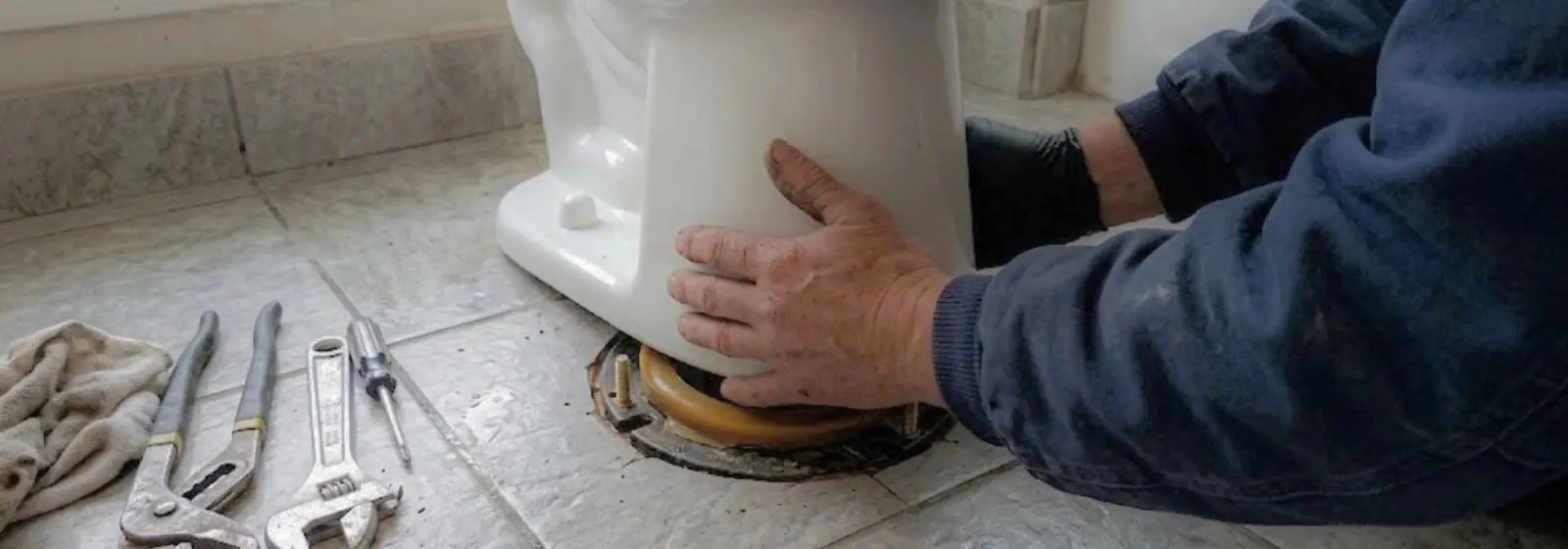
Replacing a wax ring means draining the tank, disconnecting the supply, lifting the bowl, scraping the old wax, checking the flange, and setting the bowl on a new ring with new closet bolts. If the flange is cracked, rusted or sits below the finished floor, we repair it with a flange ring or extender so the toilet sits flat and the seal holds.
Do not caulk around the base to stop a seep. Caulk hides the leak while water goes into the subfloor, and soft flooring near the bowl means it has run a while.
Supply valves and supply lines under the tank
The small valve on the wall and the braided line to the tank both age. A valve that weeps at the stem, will not turn, or drips when closed needs replacing, because it is the shutoff you depend on in an emergency.
Supply lines last far shorter than the toilet itself. A bulging braid, rust at the nut, or a drip on the floor means replace the line, and we suggest a new valve at the same time so the shutoff is dependable. If the source of a damp wall or ceiling is not obvious, leak detection finds it without opening up the whole room.
Toilet overflowing or leaking now?
Close the valve behind the bowl and call the 24/7 line. We give the price before any work starts.
Symptom, likely cause and fix
| Symptom | Likely cause | Typical fix |
|---|---|---|
| Bowl rises after a flush | Trap or closet bend clog | Flange plunger, closet auger, then cable if needed |
| Several drains gurgle | Main line partly blocked | Cable or jet through the cleanout, camera check |
| Tank refills every few minutes | Leaking flapper or worn seat | New flapper, clean or replace the seat |
| Hissing that never stops | Failed fill valve | Replace the fill valve and set water level |
| Water at the base after use | Failed wax ring or loose bolts | New wax ring, tighten or replace closet bolts |
| Toilet rocks or shifts | Loose bolts, uneven floor, damaged flange | Shim and reseat, or repair the flange |
| Drip at the wall valve | Worn valve packing or old stop | Replace the stop valve |
| Cracked tank or bowl | Impact or age | Replace the toilet |
Replacing or installing a toilet
Repair makes sense when the problem is a part. Replacement makes sense when the porcelain is cracked, the toilet clogs every week, or the bathroom is being updated. We remove the old unit, set a new wax ring and closet bolts, connect a new supply line, level the bowl and test with several flushes while watching the base.
Move a toilet to a new location, add a bathroom or change drain piping, and the job becomes plumbing installation. Swapping one toilet for another in the same spot without changing pipes is the lighter case. Permit rules vary, so ask the Rahway Division of Building which one yours is.
Rental properties and tenants reporting leaks
About 48.5 percent of Rahway homes are renter-occupied, so a good share of our toilet calls start with a tenant. If you rent, shut the supply valve, take photos of the water, and tell your landlord or property manager in writing the same day. Delay turns a small base leak into a ceiling stain for the neighbor below.
Landlords and managers can authorize us by phone, and we explain the cause and price before work starts. Clark landlords can read about our Clark service too. Rahway also requires a Certificate of Approval for Continued Occupancy when a home is sold or tenants change, so a leaking or running toilet is a plain item to fix before that inspection.
What affects the cost of toilet repair
Want your real number? Call (732) 466-1098 and describe what you see. If the answer needs a look, we say so and price the work on site before starting.
Questions about toilet repair
Yes. Overflows and base leaks do not wait for business hours, so the line is open 24/7 and we offer same-day appointments when available. Tell us whether water is still moving and whether the supply valve turned, and we will say what to do until a plumber arrives.
Usually the flapper at the bottom of the tank is worn and lets water seep into the bowl, or the fill valve does not shut off at the right level. Both parts are inexpensive compared with the water they waste. A few drops of food coloring in the tank will show a flapper leak if color reaches the bowl without flushing.
Yes. Movement breaks the wax seal, and a seal that fails slowly leaks into the subfloor where you cannot see it. Shims or a loose bolt are sometimes the whole story, but a damaged flange or soft floor needs a proper repair.
When other drains act up at the same time, when the toilet gurgles after the shower runs, or when a lower-level drain backs up first. That pattern points to the main line, and we would look at it with a camera and a cable rather than keep working on the bowl.
Yes. If the bowl is cracked, the tank leaks through the porcelain, or repairs would cost close to a new unit, we replace it. We install the new toilet, new wax ring and new supply line, then test for leaks.
Report it to your landlord or property manager right away and photograph the leak. If the landlord authorizes us, we handle the repair and give the price before work starts. In an emergency, close the supply valve and keep the water off the floor.
Permit rules vary, so ask the Rahway Division of Building. Under state rules, ordinary maintenance includes like-for-like fixture swaps with no piping change, but the office can confirm for your job.