
Sewer Camera Inspection in Rahway, NJ
A camera on a flexible rod shows what is inside your sewer line. We record the run, explain what is serious and what is not, and tell you the price before any repair begins.
What a sewer camera inspection is
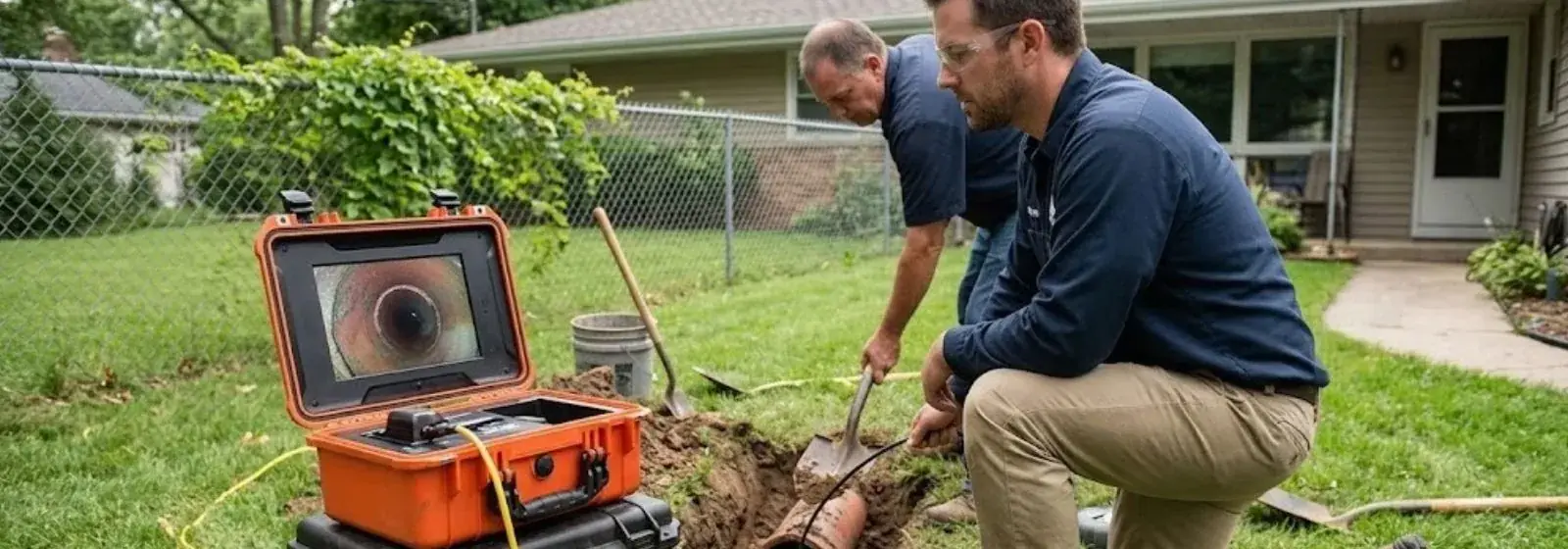
A sewer camera inspection is a video look inside your sewer line using a small waterproof camera on a flexible rod. For sewer inspection in Rahway, NJ we usually enter through a cleanout and push the camera toward the street. A light on the head shows the pipe wall as it travels, and the picture appears on a monitor.
It answers a question a cable and a guess cannot: what is the pipe actually doing? A line can be blocked by roots, cracked at a joint, sagging in a low spot or perfectly fine and just dirty. The camera tells those apart before you spend money on the wrong fix.
What the camera can show
Bellies
Low spots where the pipe has sagged and water collects. Waste settles there and clogs form.
Offsets
Joints that have shifted so the pipe no longer lines up. They catch paper and snag cables.
Cracks and breaks
Hairline cracks, longitudinal splits and broken sections, which let roots and soil in.
Roots
Fine hair roots at a joint or a thick mass choking the bore.
Scale and buildup
Rust in cast iron, grease in kitchen lines and mineral crust that narrows the pipe.
Collapsed sections
Pipe that has crushed or caved in, which usually means a dig or lining is needed.
How the inspection runs
Open the cleanout
We open the cleanout at the house, or pull a toilet if none exists, and check that the line is clear enough for the camera.
Push the camera
A flexible rod carries the camera and light down the pipe while we watch the monitor.
Locate and mark
A locator tracks the camera head so we can mark the line and note the depth and any problem spot.
Review the recording
We go over what the camera saw and answer your questions.
Need to know what is in the pipe?
Call to schedule a camera visit. Same-day appointments are available when the schedule allows.
Finding the line and marking problems
Most sewer lines run in a fairly straight path from the house to the street, but older homes can have bends, branches or former connections that are no longer in service. A locator picks up a small transmitter inside the camera head and lets us mark the line on the surface. That is how we pin down a crack to a spot you can see.
Knowing where the pipe runs and how deep it sits changes the repair plan. It tells us whether a trenchless method is possible, how much lawn or paving is involved, and where to call 811 before anyone digs. In New Jersey you must call 811 at least three full business days before digging, which excludes weekends and holidays.
Buying a home: camera check versus the CACO inspection
Rahway requires a Certificate of Approval for Continued Occupancy when a home is sold or tenants change. That is an inspection through the city's Property Maintenance division and it checks the property against city standards. It is a separate process and does not replace a sewer camera check.
A buyer's camera inspection looks at the one part of the plumbing nobody can see. With a median home age of 1962 in Rahway, many houses have sewer pipe that is decades old. A recording gives you something to compare against repair prices and to raise with the seller before closing. A seller can use it too, to fix a known problem before listing.
Reading the findings honestly
Not every crack needs digging. A hairline crack on a pipe that flows well may be watched and rechecked years later, while a broken joint with roots pouring in is a different story. We tell you which category your pipe falls into, and we do not push repairs the camera does not support.
| What the camera finds | What it usually means | Likely next step |
|---|---|---|
| Clean pipe, good flow | The line is in fair shape | Nothing, or a recheck later |
| Heavy grease or scale | Buildup narrows the bore | Hydro jetting or a cable, then a recheck |
| Roots at a joint | A gap or crack lets them in | Cleaning now, then a spot repair if they return |
| Belly holding water | A sag that traps waste | Watch it or repair, depending on depth and symptoms |
| Offset joint | Pipe sections have shifted | Spot repair if flow or snagging is a problem |
| Cracked or broken section | Soil and roots can get in | Repair or a liner, based on pipe condition |
| Collapse | The pipe has failed | Excavation or replacement |
When a camera visit is worth scheduling
- You are buying a home with an older sewer line and no recent records.
- Your drains clog again within weeks of a cable cleaning.
- A tree grew near the line, or roots have been cut before.
- You plan to jet the line and want to confirm the pipe can take it.
- You are about to pay for a repair and want proof of the problem.
If your line is blocked right now and sewage is rising, start with drain cleaning or sewer cleaning, because the camera cannot see through a full line. We can do both on the same visit when the line allows it.
What affects the cost of a sewer camera inspection
Want your real number? Call (732) 466-1098. We give you a clear price before work starts. We also serve Clark and nearby towns for sewer camera work.
Sewer camera inspection questions
Most runs are a short visit, since the camera moves along the line at a steady pace. The setup, the cleanout access and the length of the pipe affect the time. If the line is heavily blocked, we may need to clean it first so the lens can see the wall.
Not always. A clear line is easy to inspect. A heavily blocked or greasy line often needs cleaning first, because the lens fogs and the view is limited. We tell you if cleaning is needed before the camera can show the pipe honestly.
Yes, we record the run and can go over it with you on the monitor. Recorded video helps you if you are buying a home, comparing repair prices or talking with a landlord, seller or insurer.
No. The Certificate of Approval for Continued Occupancy is a separate city inspection through the Property Maintenance division. It does not look inside your sewer line. A camera check tells you about the pipe, so use both.
Not necessarily. Small cracks in a line that flows well are often watched rather than repaired. Large offsets, bellies that hold water and collapses are different. We explain what each finding means and what the options are.
We use a locator that picks up a small transmitter on the camera head, so we can mark the pipe on the surface. That also tells us the depth, which helps if a repair is needed. Call 811 before anyone digs, whatever the plan.