
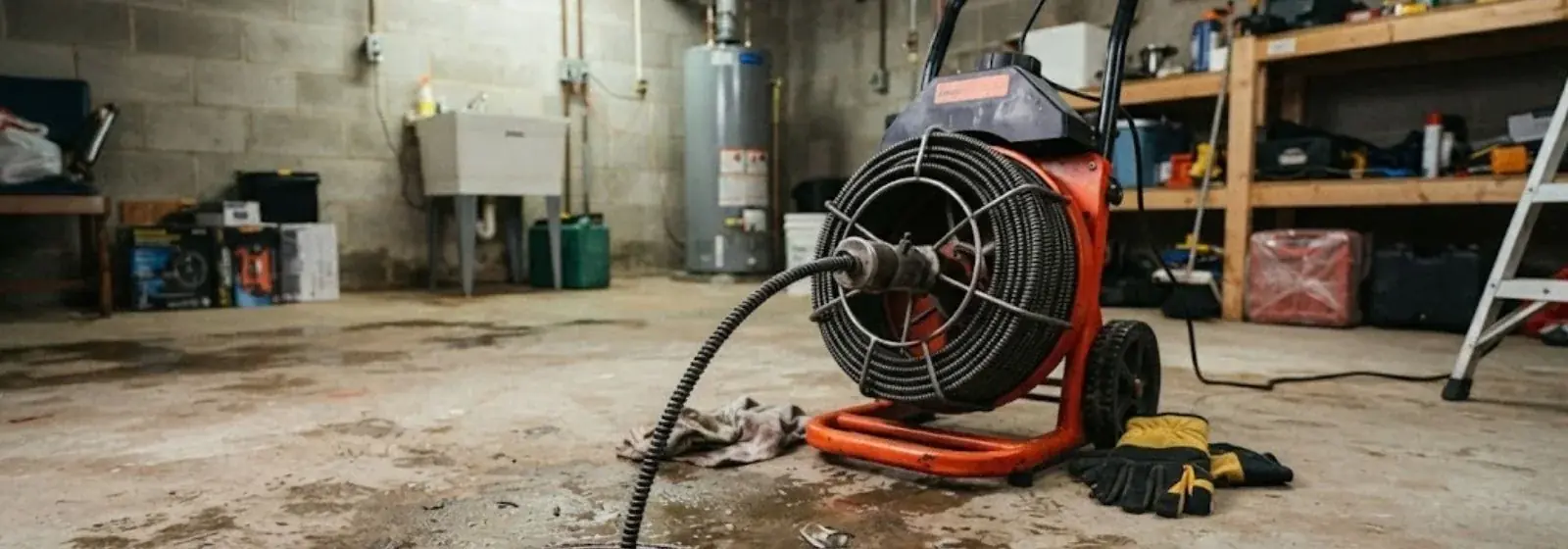
Emergency Drain Cleaning in Rahway, NJ
Water will not go down, or it is coming back up. Our licensed plumbers clear kitchen, bath, laundry and floor drains and tell you the price before the work starts.
Drain backing up? What to do while you wait
A drain that will not clear becomes an emergency once water is rising toward the floor or the smell of sewage fills the room. Our line for drain cleaning in Rahway, NJ is open 24/7 at (732) 466-1098, and we will talk you through the first steps. Stop running water in the house, hold off on the dishwasher and washer, and keep children and pets away from standing water.
Do not pour chemical cleaner into a full sink. It sits in the standing water, splashes on skin and makes the job riskier for whoever opens the line. If water is coming up from a floor drain or tub, treat it as dirty and wear gloves and boots if you must cross the floor.
One drain is slow
Water leaves late and leaves a ring behind. That points to a partial clog in the fixture's own branch line.
Gurgling after a flush
Air is pulled through a restricted pipe or past a trap. It often shows up days before a full stoppage.
Two or more fixtures back up
Fixtures that share a line are blocked downstream. Run the washer and watch the tub and floor drain.
Water in the lowest drain
A basement drain or tub that fills when upstairs fixtures drain means the blockage sits below them.
Sewer smell at a drain
A dry trap, a vent problem or sludge on the pipe wall can each cause it. The pattern tells us which.
Clogs every few weeks
Punching a hole through the middle of the pipe leaves the coating on the walls. Repeat clogs call for scouring.
Standing water in the house?
Call the 24/7 line now. Same-day appointments are available when the schedule allows.
What clogs drains in older Rahway houses
The median home in Rahway was built in 1962, and 64.9 percent of the city's homes date before 1980. That means a lot of cast iron, clay and galvanized drain pipe with decades of buildup on the inside. Rough walls catch what smooth plastic would pass, so older houses clog sooner.
- Grease and cooking fat: it cools inside the pipe and builds a waxy lining that traps everything after it.
- Hair and soap: hair binds with soap scum and forms a mat at the tub trap or the first bend.
- Wipes and paper products: wipes labeled flushable do not break down like toilet paper and snag on rough joints.
- Roots: hairline cracks and loose joints in clay or old cast iron let fine roots in, and they grow into a fibrous plug.
- Scale and rust: cast iron rusts into rough bumps that narrow the bore, and clay lines can shift at the joints.
Roots and scale seldom clear for good after one visit. A cable opens a channel through the blockage, and the narrowed pipe slowly closes again. If you are on your second or third clog in a year, ask us about a camera look, which is what our sewer camera inspections are for.
Kitchen sink clogs, the most common call
Kitchen drains carry grease, starch and food scraps through a narrow pipe that often runs a long way before it meets the stack. Grease coats the wall, rice and pasta swell in it, and coffee grounds pack into the gaps.
We start at the trap and the nearest cleanout, since a short cable from there does less harm than a long run from a roof vent. A small drum machine with a grease-cutting head clears most kitchen lines. If a disposal sits in the line and has jammed, that is a different repair, which our garbage disposal repair service covers.
Shower and tub drains
Showers
Shower clogs are mostly hair wrapped in soap scum and sitting just below the strainer or in the trap. Lifting the strainer and pulling out the mat by hand clears many of them. If the water still stands after that, the clog is deeper in the branch and needs a cable.
Bathtubs
Tub drains clog at the stopper and the overflow assembly, where hair snags on the linkage. Pulling the stopper and cleaning it is a fair first step. If the tub also bubbles when the sink drains, the blockage is further down the line.
Drain line leaks that look like clogs
A drain does not run under pressure, so it leaks at slip joints, failed seals or cracks in old cast iron, often only when the fixture drains. A ceiling stain below a bathroom, a damp cabinet floor or a musty smell can all point to one. If water is not where it should be, our leak detection work finds the source before anyone opens a wall.
What slow drains and gurgling mean
A slow drain means the pipe is partly blocked and water is passing a narrowed spot. Gurgling means air is moving where water should be, either because a clog is holding back flow or because a vent is partly blocked. One gurgling fixture usually points to its own branch. A toilet that gurgles when the tub drains, or a floor drain that bubbles when the washer runs, points to the main.
Cable or jet: how we choose the tool
We carry both, and the right one depends on what is in the pipe. A cable punches through a blockage and is the quickest fix for most single-fixture clogs. Hydro jetting scours the pipe wall with high pressure water and suits grease, scale and clogs that keep returning.
| What we find | Usual first tool | Why |
|---|---|---|
| Hair and soap in a tub or sink | Small hand or drum cable | Fast, low force, minimal risk to the pipe |
| Grease buildup in a kitchen line | Cable with a cutting head, then jetting if it returns | A cable opens flow but jetting removes the lining |
| Roots in a clay or cast iron branch | Cable with a root cutter, then a camera look | Cutting clears the plug and the camera shows where they enter |
| Heavy scale in old cast iron | Camera first, then careful jetting | Scale can hide thin or cracked pipe |
| Pipe known to be cracked or offset | Gentle cable only, after camera review | Force can widen a crack or snag a joint |
When the clog is the main line
If every drain in the house is slow, or the lowest fixture in the basement fills first, the blockage is probably in the main line. A branch clog stays with one fixture, but a main line clog backs up anywhere below the blockage. Standing sewage in a floor drain or tub is the clearest sign.
Main line work happens from the cleanout and uses a larger cable or a jetter, which is what our sewer line cleaning service covers. Keep water off until a plumber arrives, because each flush adds to what is rising on the floor.
What you can safely try, and why chemicals backfire
Reasonable first tries
- Plunge a sink or tub with a plunger that makes a good seal, and block the overflow with a wet rag.
- Remove and clean the strainer, stopper or pop-up by hand.
- Unscrew and empty the P-trap under a sink into a bucket.
- Use a hand-turned drain snake only for a few feet, and stop if it jams.
- Run hot tap water, not boiling, after a grease clog to see if it moves.
Stop and call us if
- Water is coming up from a floor drain or the lowest tub.
- More than one fixture is slow or gurgling.
- You have already used a chemical product and the drain is still blocked.
- The pipe is old cast iron or clay and a snake will not pass.
- The same drain has clogged more than once this season.
Chemical openers work by heat or strong chemistry, and in a fully blocked drain the product has nowhere to go. It pools, it can burn skin and eyes when someone opens the trap, and it can damage old fittings. Mixing two products can release harmful fumes. If you used one, tell us before we open the line.
Licenses, cables and cracked pipe
Here is the honest part. New Jersey does not require a plumber's license to clear a stoppage, and you can rent a cable at a hardware store. The risk is to the pipe, not to the law. A cutting head can gouge brittle clay or thin cast iron, and a cable that jams at an offset joint can snap or pull a pipe apart.
We ask about the age and material before the cable goes in, and we stop and look with a camera when a line feels wrong. Repairs go beyond stoppage clearing, so they must be done by a licensed master plumber or a contractor under one. You can check any plumber's license through the New Jersey Division of Consumer Affairs.
Renting or owning a rental in Rahway
About 48.5 percent of Rahway homes are renter-occupied, so many clogs involve a tenant and a landlord. Grease, wipes and hair usually come from use, while roots, scale and failing old pipe are building problems. We cannot decide who pays, but we can explain what we found so the right person handles it.
Landlords should know that Rahway requires a Certificate of Approval for Continued Occupancy when tenants change, with an inspection through the city. Leaking drain lines and failed fixtures are practical issues to fix before that visit.
What affects the cost of drain cleaning
Want your real number? Call (732) 466-1098 and describe which drains are affected. We give you a clear price before work starts. If a backup damaged your home, ask your insurer about it early, since homeowner policies commonly exclude sewer and drain backup unless an endorsement was added.
We also serve Clark, Colonia and Linden from our Saint Georges Avenue office, and our service area page lists the rest.
Clog won't clear?
Call the 24/7 line. We will tell you the price before any cable goes in.
Drain work follows New Jersey's plumbing subcode, which adopts the National Standard Plumbing Code. In practice that means traps, vents and cleanouts stay where the code wants them, and we will not remove a trap just to get a cable through.
Drain cleaning questions
Yes. The line at (732) 466-1098 is open 24/7, including nights, weekends and holidays. Call, describe which drains are backing up, and we will schedule a plumber as soon as one is free. We do not promise a set arrival time, but we do tell you what to do in the meantime and give you the price before work starts.
The two often share a branch line in the basement. When kitchen water rises in the laundry tub, the blockage sits below the point where the lines join. That often means the kitchen stack or the main line, so a short cable at the sink trap may not be enough.
A simple sink or tub clog is often a short visit once we have access to the trap or a cleanout. A grease-packed kitchen line, roots or a main line backup take longer, and we cannot know which you have until the cable meets the blockage. We tell you what we find as we go so the plan and price stay clear.
We advise against it. In a fully blocked pipe the product just sits, and it can burn skin when someone later opens the trap. A plunger or a hand-turned drain snake is the safer first try, and a plumber can take over from there. Never mix two cleaning products.
Not legally. New Jersey allows people who are not plumbers to clear stoppages. The risk is to your pipes, since a cable forced through brittle clay or thin cast iron can crack it. Any pipe replacement or repair must be done by a licensed master plumber or a contractor working under one.
Tell your landlord first and in writing if your lease asks for it. Many leases decide who pays based on the cause, such as grease and wipes versus roots in an old line. If it is an emergency, we can come out and explain what we found so you and your landlord can settle the rest.
One slow fixture usually means a clog in its own branch. If the toilet gurgles when the tub drains, or a basement floor drain bubbles when the washer runs, the main line is the likelier culprit. See our page on sewer line cleaning for that case.