
Repiping a House with PEX in Rahway, NJ: Types and Layouts
PEX types, manifold layouts, how it compares with copper and CPVC, and how the job goes.
Repiping with PEX in plain terms
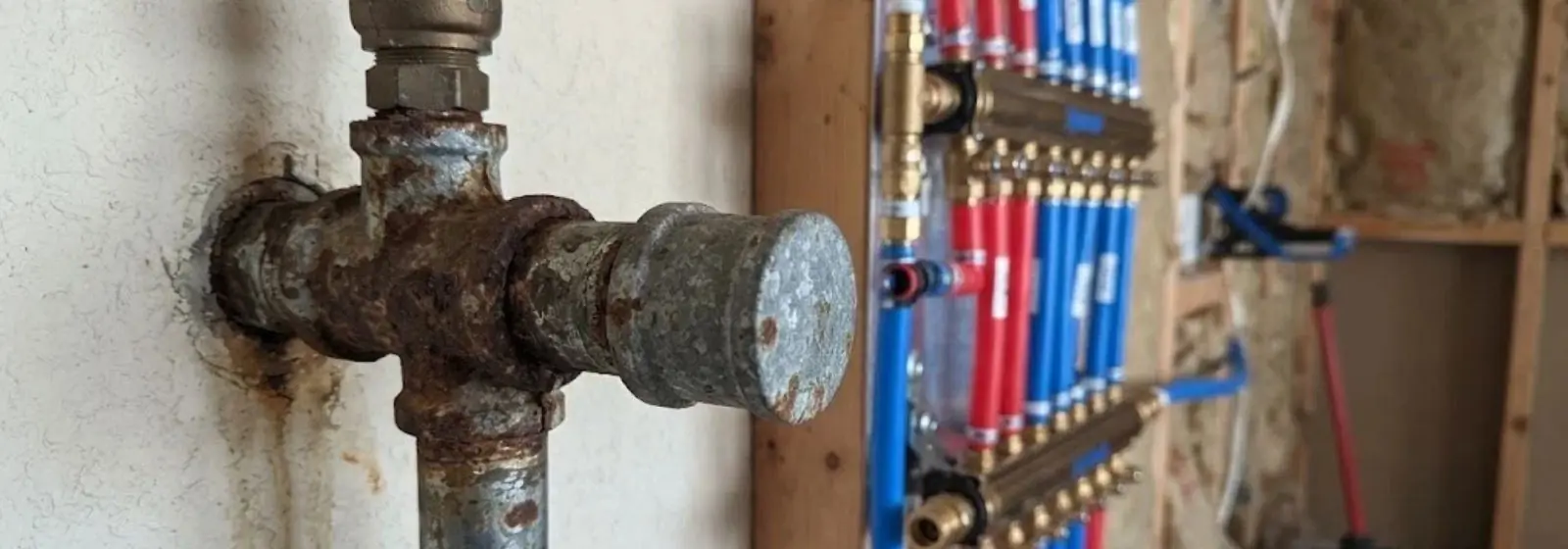
Repiping a house with PEX in Rahway, NJ means removing old supply pipe and running flexible cross-linked polyethylene tubing from a central manifold to each fixture. Done by a licensed plumber, it replaces failing galvanized or old copper with tubing that bends around corners and needs fewer joints. The work usually opens small sections of drywall, not whole rooms.
We do not quote a price in a blog post because house size, access and fixture count move the number too much. Call (732) 466-1098 and we will walk through your layout and give a clear price before work starts.
PEX-A, PEX-B and PEX-C
PEX comes in three common types, labeled A, B and C, and the difference is how the polyethylene is cross-linked during manufacturing. PEX-A is generally the most flexible and can be expanded for fittings. PEX-B is somewhat stiffer and is joined with crimp or clamp rings. PEX-C is less common in residential repiping.
Your plumber will pick the type and fitting system that suit your house and the local code. Whichever type goes in, confirm the tubing and fittings are rated for potable water and carry NSF/ANSI 61 marking.
PEX vs copper vs CPVC
| Feature | PEX | Copper | CPVC |
|---|---|---|---|
| Flexibility | Bends around corners, fewer fittings | Rigid, needs elbows and joints | Rigid plastic, needs joints |
| Joining | Crimp, clamp or expansion fittings | Soldered or press fittings | Solvent cemented joints |
| Access needed | Can fish through walls in many cases | Long straight runs need more opening | Similar to copper |
| Sunlight | Limited UV exposure allowed, so keep covered | No UV issue | UV can degrade it, keep covered |
| Hot water | Rated for it | Rated for it | Rated for hot water |
| Water chemistry concerns | Different from metal pipes | Some water can attack copper | Different from metal pipes |
| Manifold layout | Well suited | Possible but less common | Possible but less common |
PEX must not sit in direct sunlight for long, since UV light weakens it. That is why installers keep it covered and run it inside walls and conduit rather than leave it exposed near windows or on a sunny wall. Where pipes pass through masonry, we sleeve them.
Manifold layouts and how the house is plumbed
With a manifold, the main line comes into a central box and a separate tube runs to every fixture. Each tube has its own shutoff, so you can close the line to one sink without losing water elsewhere. The alternative is a trunk and branch layout, where a main tube feeds branches with tees.
Home run manifold
Each fixture has its own shutoff at the manifold. Good pressure balance and easy isolation.
Trunk and branch
Fewer tubes, easier in tight framing. A shutoff at each fixture is the control.
Hybrid
Manifolds for bathrooms, trunks to far rooms. Common in two-story homes.
Mixed with existing pipe
Where part of the house is left as is, we transition with approved fittings.
How the job unfolds, including patching
Walkthrough and mapping
We locate the main, the water heater and every fixture, and plan the route that opens the fewest walls.
Shut down and demo
Water is shut off, old pipe is cut and capped, and small access holes are opened in drywall and plaster.
Run and connect
Tubing is fished, secured and tested with pressure before anything is closed up.
Test and patch
We pressure test, restore water and leave the openings ready for a drywaller or painter.
Plumbing does not include finish carpentry, so expect to hire a drywaller or painter to close the access holes. Ask before the job whether patching is part of your quote. A repiping job done in stages can keep water on part of the house, but plan on the whole system being off for part of at least one day. We do not promise a timeline before seeing the house.
Thinking about repiping?
Call the line and describe what your pipes are doing. We will tell you what to look at.
Cost factors and quote comparison
When you compare bids, ask each plumber the same questions: what pipe type, how many fixtures, which walls get opened, whether the water heater connections are replaced, and who patches. Call (732) 466-1098 for your real number.
What this means in Rahway
Census data shows 28.6 percent of Rahway homes were built before 1950, and 48.3 percent before 1960. Homes of that age often have galvanized steel, early copper or mixed repairs that rust from the inside out and lose pressure. If you have low pressure or brown water, a pressure test and a look at the pipe can show whether repiping is justified before you open walls.
Under state rules, repiping is plumbing work that needs a licensed master plumber, an authorized plumbing contractor or employees under their supervision. Ask the Rahway Division of Building, at One City Hall Plaza, whether a permit applies. When selling or changing tenants, Rahway also requires a Certificate of Approval for Continued Occupancy, and the inspection can flag leaks and failed fixtures. For nearby towns like Clark, see our service areas page.
Insurance and what homeowners should know
Homeowner policies commonly cover sudden pipe bursts but not gradual leaks or wear. Repiping to replace aging pipe is typically a maintenance cost, so ask your insurer what applies before you plan around a claim. Keep photos and invoices for any past leak repairs.
Repiping questions
Yes, when the tubing and fittings are rated for potable water and installed by a licensed plumber. Look for NSF/ANSI 61 marking on the products and ask your plumber which type they plan to use.
No. UV light weakens PEX over time, so installers cover it and avoid long exposed runs near windows or outdoors. If tubing is stored before the job, it should be kept covered.
It depends on house size and access, and we will not promise a window. Plan on the water being off for part of at least one day and ask your plumber about staging the work.
Often some access is needed. About 28.6 percent of Rahway homes date from before 1950, and finished plaster can limit how much we can fish through. A pressure test and a good look at the pipe help us open as little as possible.
Permit rules vary, so ask the Rahway Division of Building at One City Hall Plaza whether your job needs one before work starts. A licensed plumber will normally know what to ask.
Yes, sometimes. A bathroom or kitchen branch can be replaced on its own, and we use approved transition fittings to connect to the remaining pipe. A pressure test tells us if that makes sense.