
CIPP Pipe Lining Cost in Rahway, NJ: What Sets the Price
How cured-in-place pipe lining works, when it fits a sewer line, and how to compare it with digging.
What CIPP lining costs and what it is
CIPP lining cost in Rahway, NJ comes down to how much pipe needs lining, how deep and accessible it is, and what shape the old pipe is in. We do not quote a number from a blog post because two sewer lines on the same street can price very differently. Call (732) 466-1098 and we will explain the line items for your pipe.
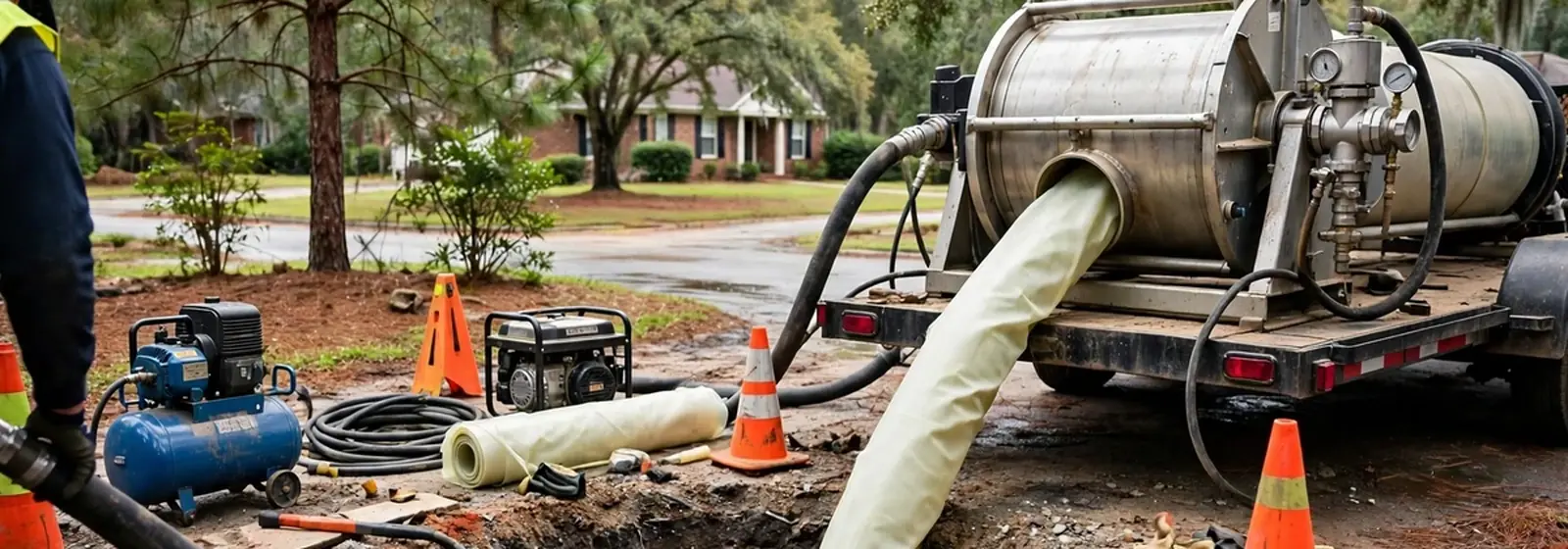
CIPP stands for cured-in-place pipe. A resin-soaked felt tube is pulled or inflated into your existing sewer line, then hardened so it forms a new, smooth pipe inside the old one. It is a trenchless method, so the work happens mostly through a cleanout or a small access pit instead of a long open trench.
How the lining process works
Camera inspection
A crawler camera runs the full line so we can see cracks, offset joints, roots and low spots. The footage decides whether lining is even an option.
Cleaning the host pipe
Roots, scale and grease have to come out first. A jetter or cutter leaves the old pipe clean enough for the liner to bond.
Liner installation
The resin-saturated tube goes in through the access point and is pushed tight against the pipe wall with air or water pressure.
Curing and reopening
Heat, steam or light cures the resin into a hard shell. We then cut the liner open at each connection and run the camera again to confirm the result.
Because the first step is a camera run, a sewer inspection is where every lining conversation starts. Skipping it means guessing at pipe condition, and a bad guess gets expensive.
When lining fits and when it does not
Lining works well when the old pipe is still round and in line but leaking or letting roots in. That covers hairline cracks, failing joints, and root intrusion at the seams. The liner seals those paths and leaves a smooth interior that sheds grease and debris better than old clay or cast iron.
It does not fix a collapsed pipe, a badly bellied section that holds standing water, or a line that has separated so far the liner has nothing to bond to. A belly is a dip where the pipe has settled, and a liner follows the dip instead of removing it. In those cases the pipe needs a spot dig or a full replacement, which is what our sewer line repair work covers.
| Question | CIPP lining | Open trench replacement |
|---|---|---|
| Digging | Small access pit or cleanout, little lawn and hardscape disturbance | Long trench, often through lawn, walkway or driveway |
| Fits | Cracks, root-invaded joints, aging round pipe | Collapsed, separated or badly bellied pipe |
| Fixes a belly | No, the liner follows the dip | Yes, grade is reset as new pipe goes in |
| Pipe diameter | Liner slightly reduces inside diameter | New pipe can match or exceed the old size |
| Surface restoration | Usually limited | Often the largest line item after labor |
| 811 call | Required if any digging is planned, including access pits | Required before the trench opens |
| Decision starts with | Camera footage and a cleaned pipe | Camera footage and a locate of the line |
Not sure which one your pipe needs?
Our 24/7 line is open. Tell us what the drain is doing and we will set up the camera run.
Cost factors and how to compare quotes
When you compare quotes, ask each contractor for the same things in writing: camera footage of your line, the length being lined, what happens if the pipe turns out to be collapsed, and who handles any digging. Two quotes are only comparable if they cover the same footage and the same restoration. Want your real number? Call (732) 466-1098.
What this means in Rahway
Rahway sewage is treated by the Rahway Valley Sewerage Authority, which has 11 member towns including Rahway and Clark. Before you spend money on a lateral, ask the city who is responsible for which section of the line and where the property line stops. That answer decides who pays for what.
Census data shows 48.3 percent of Rahway homes were built before 1960, and the median home dates to 1962. Sewer laterals from that era are often clay or cast iron, which is why root intrusion and cracked joints are common reasons to run a camera. Owners in Clark, also an RVSA member, should ask the township public works office the same question.
Insurance, 811 and doing it in the right order
Homeowner policies commonly cover sudden pipe bursts but not gradual wear or root damage, so ask your insurer before you assume a sewer lateral repair is covered. Keep the camera footage, since it documents the pipe condition either way.
Any digging, including a small access pit, needs a call to 811 (NJ One Call) at least three full business days ahead, weekends and holidays excluded. Sewer piping near a building is also licensed plumbing work in New Jersey, so hire a licensed plumber. You can check any plumber through the Division of Consumer Affairs license lookup.
Common questions about pipe lining
Often yes, if the pipe is still round and connected. We clean the roots out first, then line the pipe so the seams roots used to enter are sealed. If the roots have already broken the pipe apart, a spot dig may be needed instead.
A liner follows the shape of the old pipe, so it will not remove a belly. A shallow dip may still drain, but standing water usually means the section needs to be dug and re-graded. The camera footage tells us which case you have.
Usually much less than an open trench. We work through a cleanout or a small access pit, though some lines need a pit at a bend or at the street end. Ask how much digging is in your quote.
Responsibility depends on where the lateral crosses the property line, and we do not state it for your address. Ask the City of Rahway before you pay for work. Rahway sewage goes to the Rahway Valley Sewerage Authority, which treats it for 11 member towns.
Yes. Lining decisions rest on what the camera shows: cracks, offsets, roots, bellies and pipe material. A sewer inspection also gives you footage to compare across quotes.
The time depends on length, access and cure method, and we will not promise a window. Call and we will plan around your line after the camera run.